Overview
The system showed everything.
Managers needed focus.
In global manufacturing environments, skill visibility is operationally critical. Managers weren't just tracking skills. They were maintaining ongoing awareness of training progress, certification gaps, and team readiness for the work ahead. That visibility directly affects safety, compliance, and production efficiency.
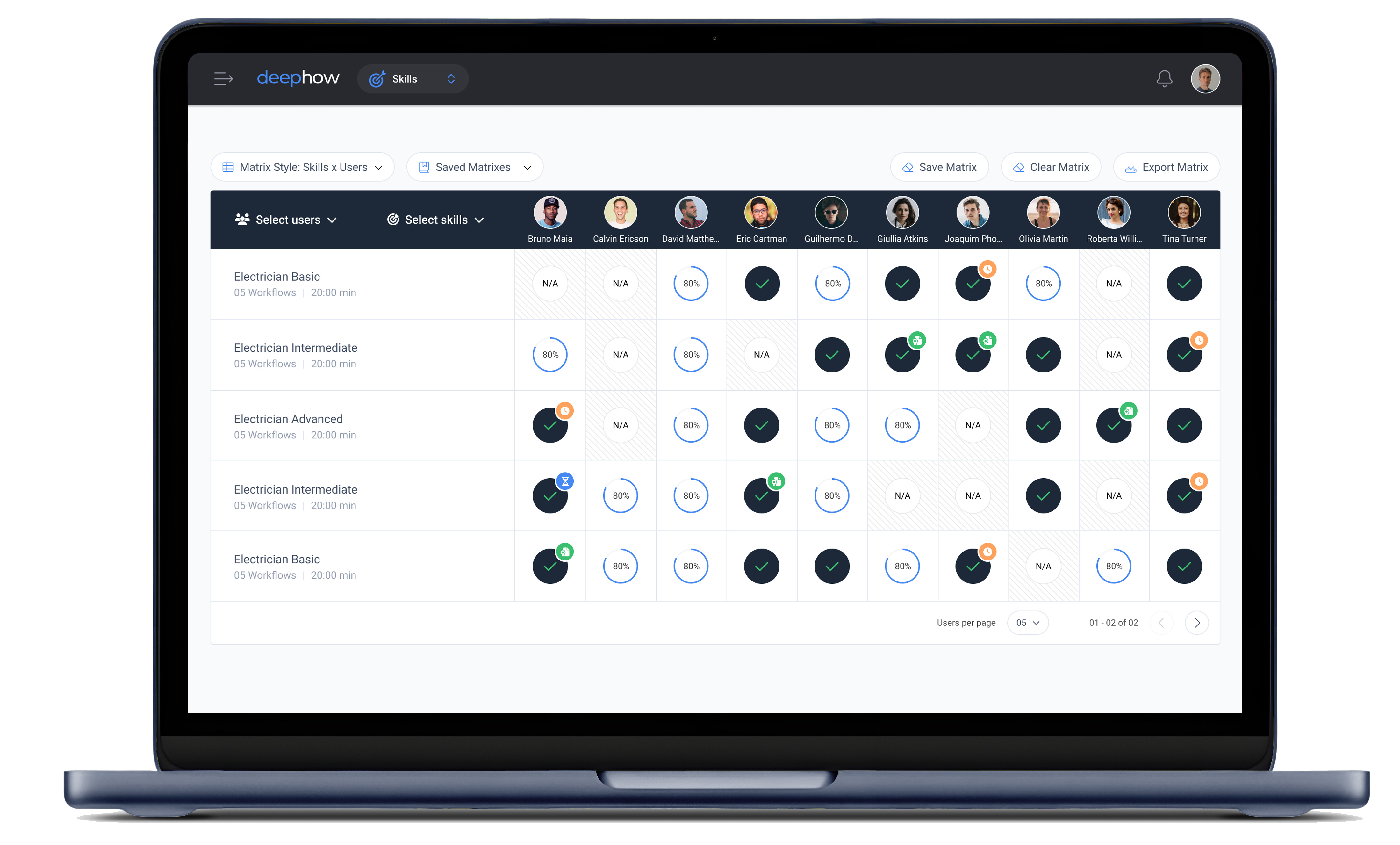
The original Skills Matrix tried to surface the entire organization at once. It overloaded both the system and the managers using it: the tool crashed under the weight of enterprise-wide data, and even when it worked, it buried actionable insights beneath irrelevant organizational complexity.
Managers didn't need enterprise-wide visibility. They needed operational clarity for their own teams.
My Role
End-to-end, from research to ship.
- Led all design work from discovery through post-launch iteration
- Ran user interviews with key enterprise clients including AB InBev and Stanley Black&Decker
- Defined UX strategy and resolved the core performance and scoping problems
- Shaped the end-to-end product experience from discovery to shipped execution
- Partnered with PMs and engineers across launch and iteration cycles
Users
Built for the person making the call,
not the person being tracked.
Skills Matrix is easy to mistake for an LMS reporting feature: a table showing who finished which course. That's not what it needed to be. In a factory running three shifts, the person who actually depended on this data every day wasn't the worker, it was their supervisor.
Manager / supervisor
The primary user. Needed to answer operational questions in the moment: who's certified to run this machine, whose training just lapsed, and if someone calls out tomorrow, who else on the floor is qualified to cover.
Worker / learner
Completed the trainings and assessments the matrix tracked, but wasn't the one making decisions from the data. A secondary presence in this experience, not its audience.
That distinction changed what the tool was for. This wasn't "show completed courses." It was workforce readiness: can this shift run safely and in compliance, right now, with the people actually on the floor.
Thinking
Scaling the interface wasn't the problem.
Scaling the mental model was.
The original Matrix loaded the entire organization and relied on managers to filter their way down to the people they needed.
That worked for smaller companies. But at enterprise scale, it broke in two ways: loading thousands of employees created performance issues, and a supervisor responsible for 15–30 people had no reason to start from the entire workforce.
The obvious solution was better filters: location → department → team. But that still meant starting with thousands of people just to find the few that mattered. We also considered letting managers build their teams manually, but searching for people one by one created unnecessary setup work.
So we changed the starting point. Instead of asking "Who do you want to see?", the Matrix started with "We think this is your team." Using organizational context and usage patterns, we could recommend the people and skills most relevant to each manager. They could then adjust the selection as needed. This reduced both the amount of data we needed to load and the amount of work managers had to do before getting value from the Matrix.
We didn't redesign the table. We changed what the product asked first.
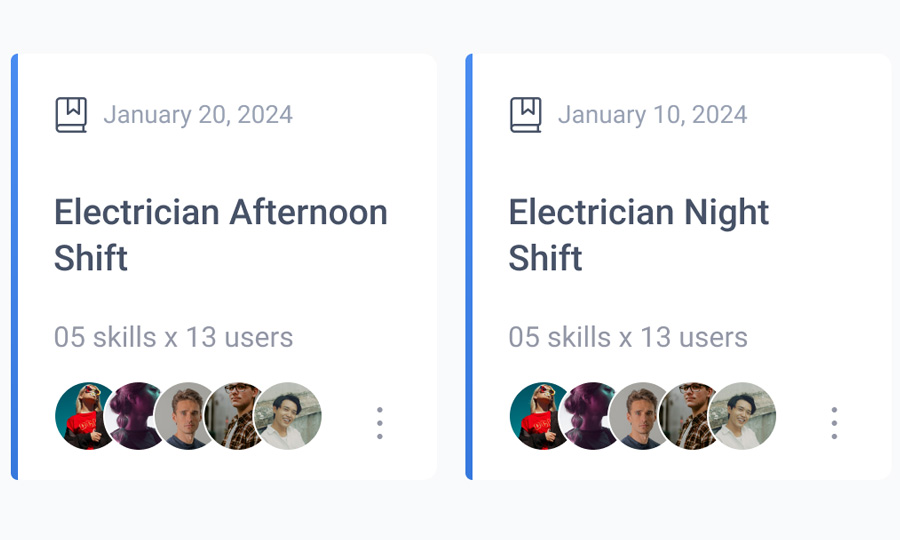
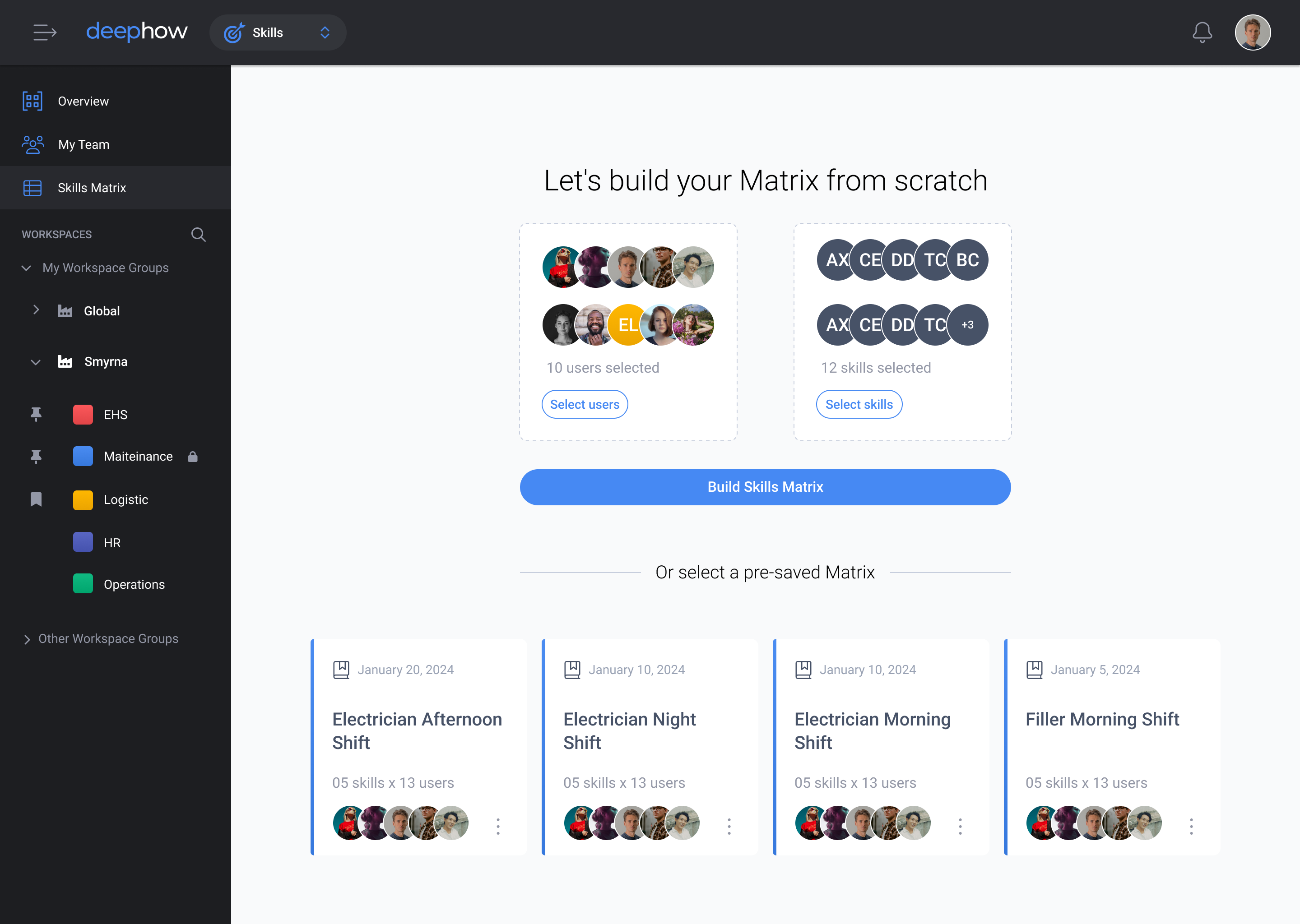
Users had already shown us what they needed next. Managers were taking screenshots of their filtered Matrix so they wouldn't have to rebuild the same view every time they came back. That workaround revealed a simple need: they wanted to return to the teams and skills they monitored regularly. So we turned that behavior into Saved Views, allowing managers to save and revisit any Matrix configuration in one click.
Decisions
The choices that shaped the product.
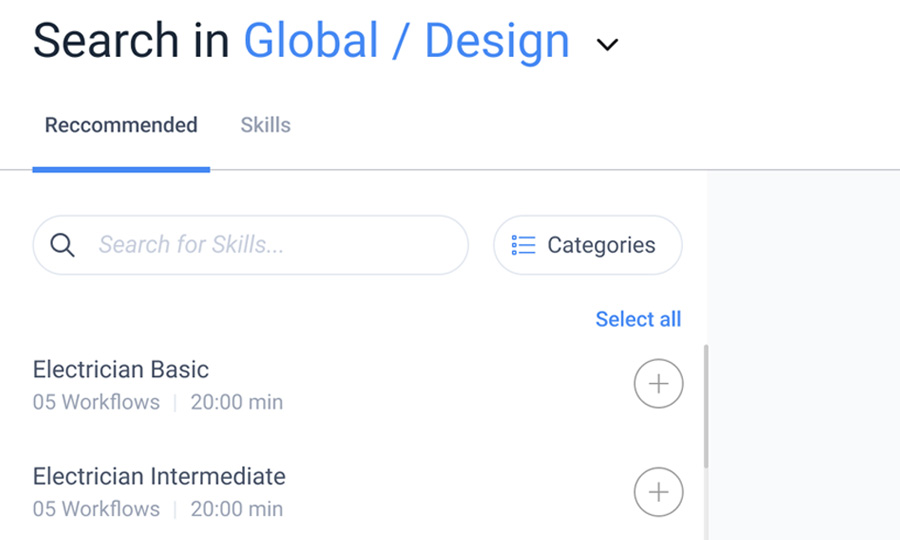
Recommendations that reduce setup friction
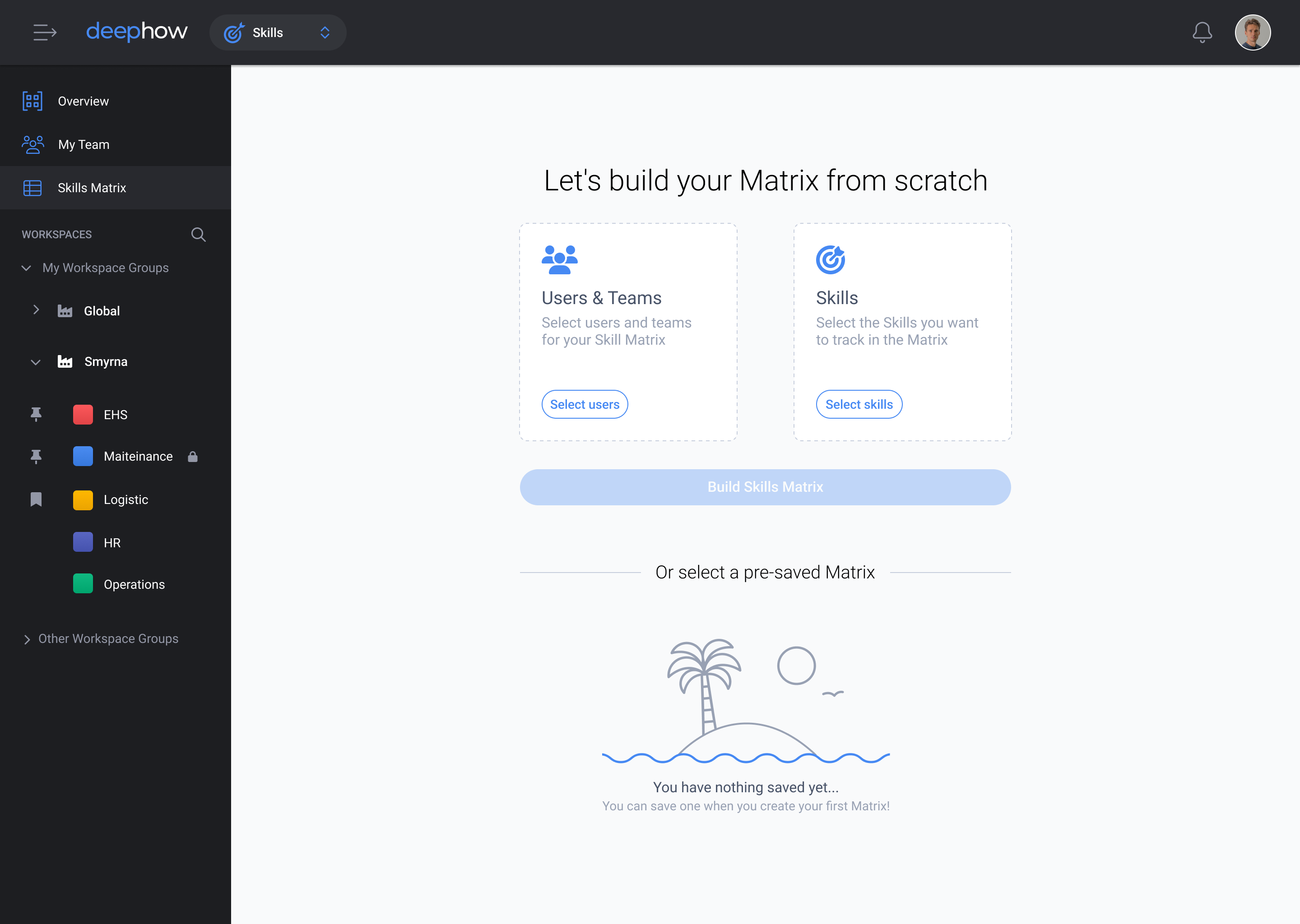
Building a matrix manually across large manufacturing teams could quickly become tedious. Instead of starting from a blank state, the experience used team context, previous usage patterns, and organizational relationships to suggest relevant people and skills upfront, dramatically reducing setup friction while keeping managers in control.
Focused operational visibility
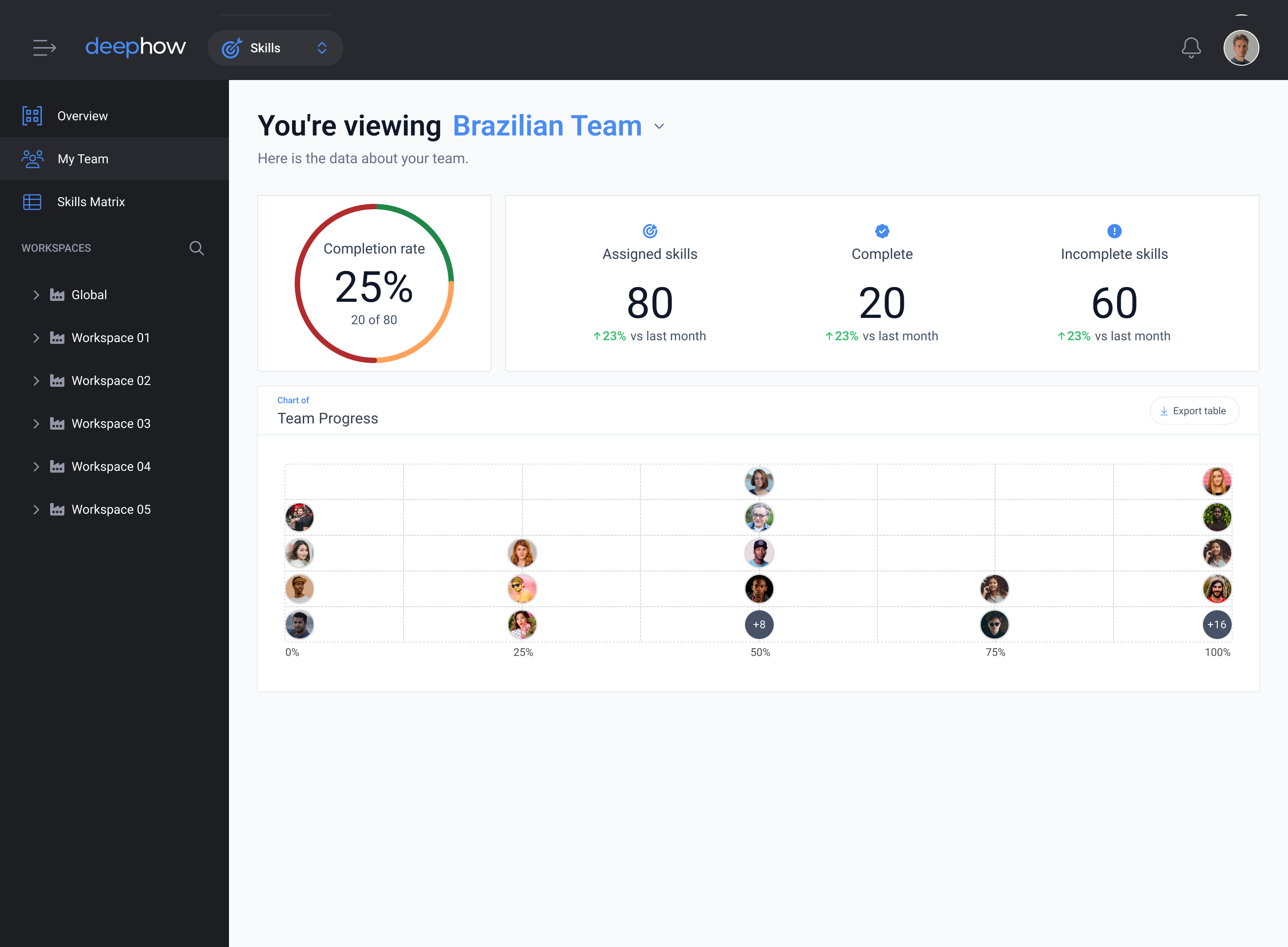
The original system prioritized enterprise-wide visibility, overwhelming both the platform and the managers using it. By scoping the experience around team responsibility instead of organizational scale, the matrix became faster, clearer, and immediately actionable for day-to-day operational decisions.
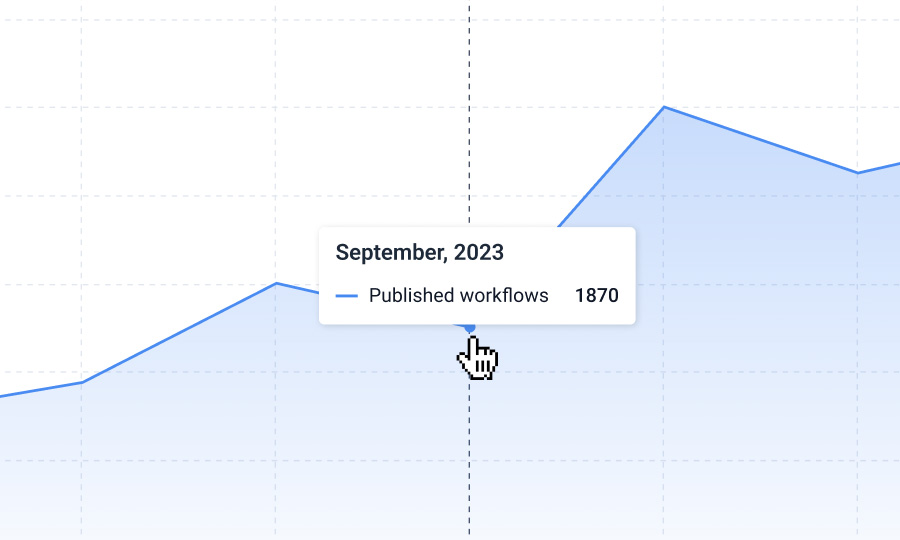
Continuous workforce visibility
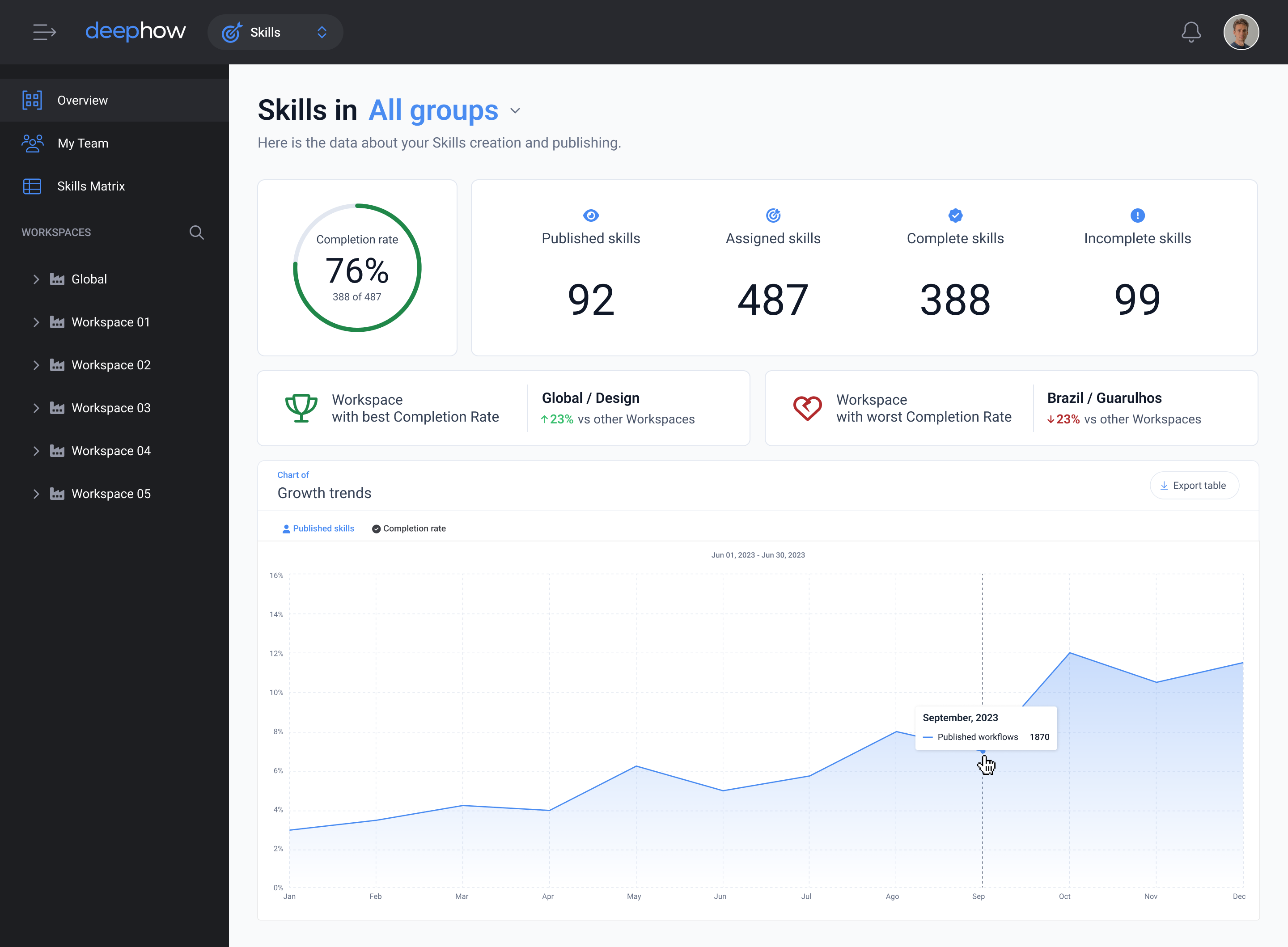
Managers didn't just need a snapshot of skills. They needed ongoing visibility into workforce readiness. The analytics experience surfaced completion rates, certification gaps, training progress, and team comparisons, helping managers identify where follow-up, coaching, or operational action was needed before it became a compliance or safety risk.
Final Design
The complete experience.
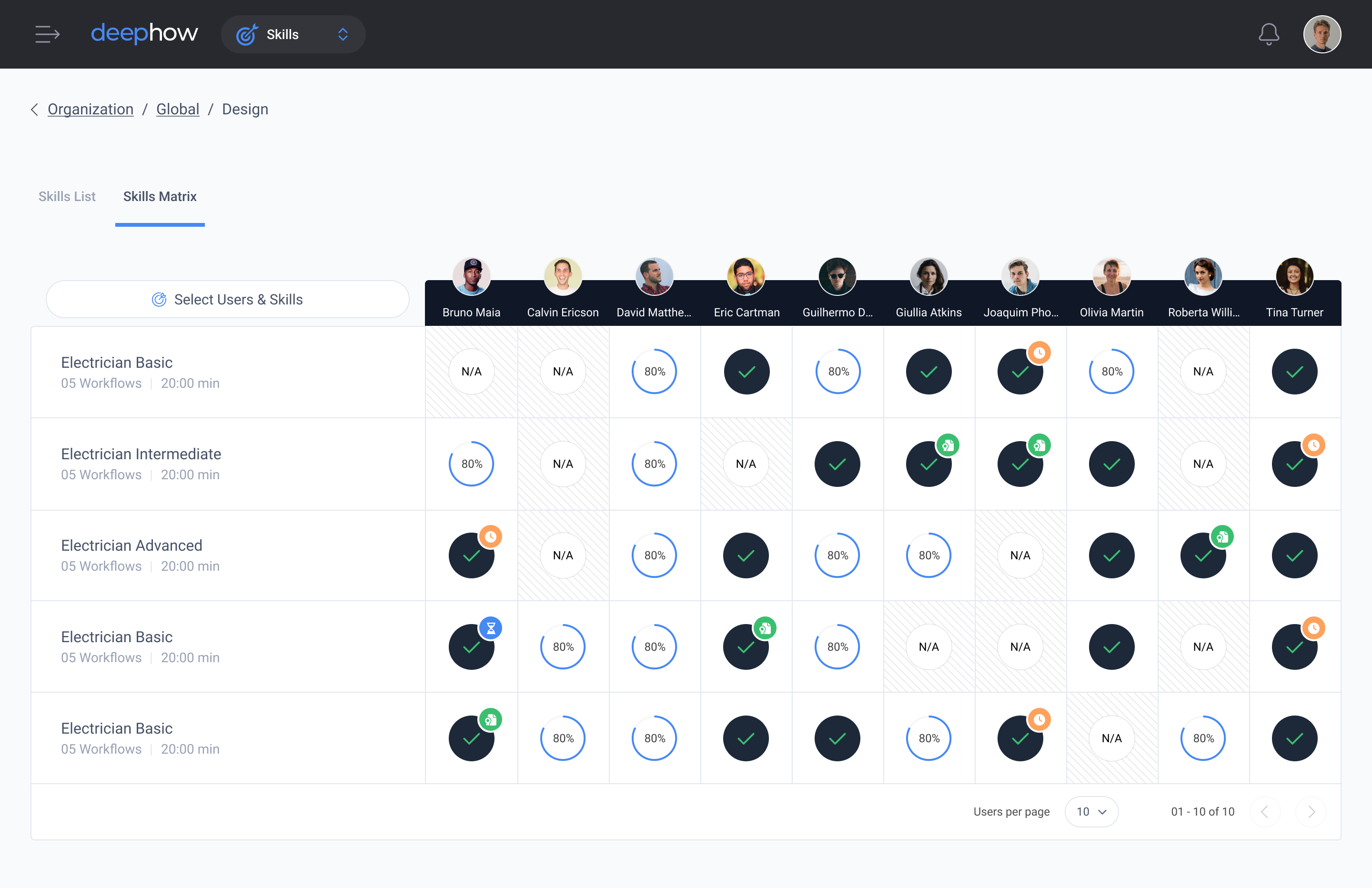
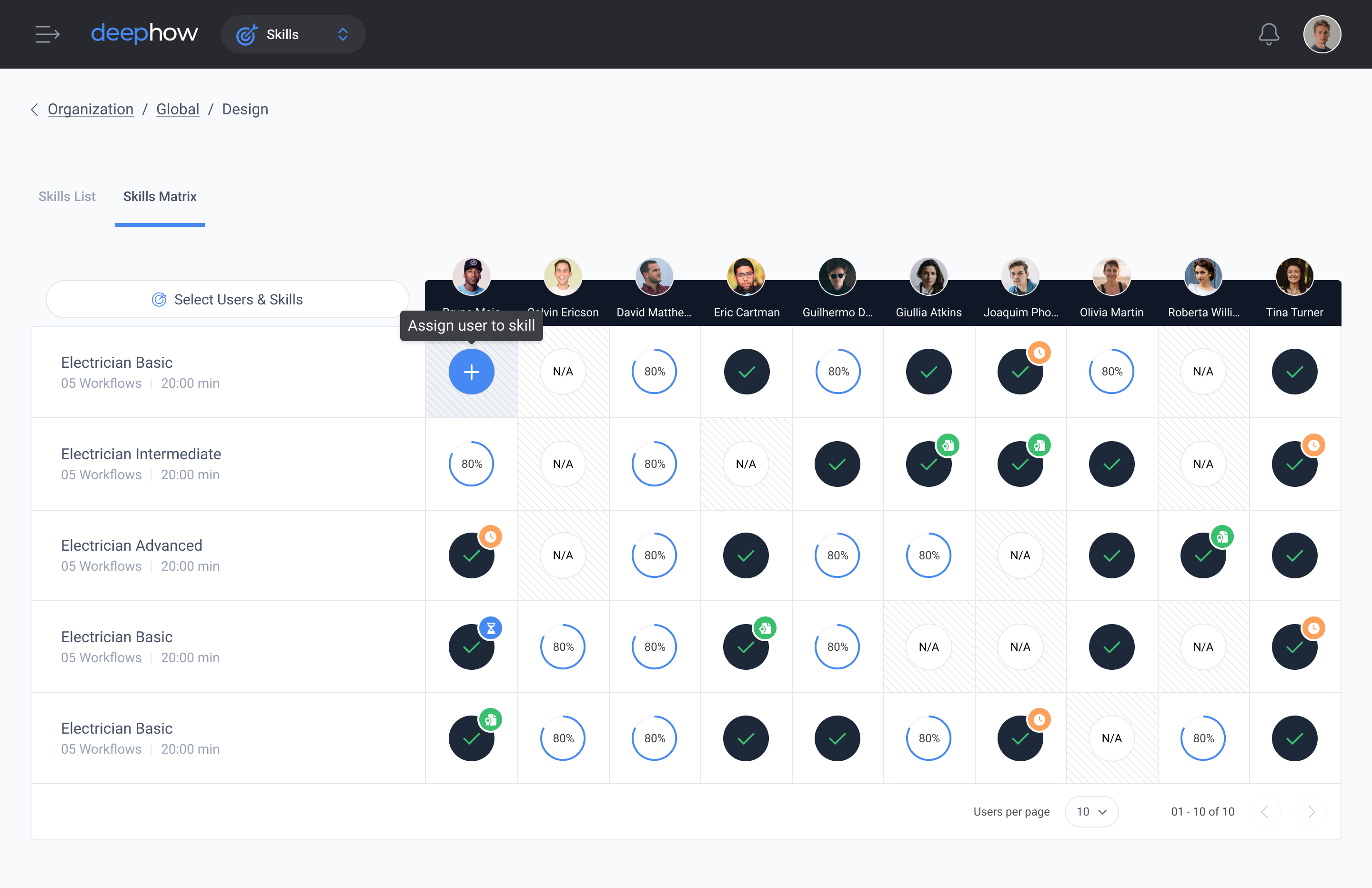
Operational clarity, at a glance.
A focused view scoped to the manager's own team, showing exactly who is certified, where skill gaps exist, and where operational attention is needed.
Fast to build, easy to return to.
Setup starts with a relevant suggestion, not a blank slate. AI recommendations surface the most likely team members and skills upfront. Saved views mean managers can return to any configuration instantly, reducing repeated setup work over time.
Workforce visibility beyond static reporting.
Instead of isolated skill records, managers gained a continuous view of team readiness, training progress, and operational gaps, making operational oversight more actionable and easier to manage at scale.
Interactive prototype.
Walkthrough of the core flow. Open in Figma →