Overview
Traditional CSAT is broken by design.
Front is a customer operations platform used by support teams across email, chat, SMS, and WhatsApp. CSAT is central to how these teams measure performance, coach agents, and demonstrate ROI to leadership.
But traditional surveys only reach 5–15% of conversations. Decisions about team quality, agent performance, and customer experience end up based on a small and heavily biased sample, typically skewed toward the most frustrated or most satisfied customers.
Traditional CSAT
5–15% response rate. Biased sample. Delayed insights. 100 conversations produce ~10 data points.
Smart CSAT
AI infers satisfaction from tone, resolution signals, and message flow, scoring every single conversation automatically.
What if we could measure satisfaction across every conversation?
My Role
Full ownership, from framing to launch.
- Led end-to-end design from early opportunity framing with PMs through final launch.
- Designed the inbox experience where AI-inferred and customer-submitted CSAT coexisted naturally in the conversation flow.
- Built the analytics and reporting layer, helping teams understand score composition, confidence levels, and the relationship between AI-inferred and survey-based signals.
- Explored Smart and Customer CSAT as complementary signals: one more emotional and immediate, the other more scalable as AI calibration matures.
- Designed the admin activation flow and self-serve billing experience, including contextual upsell moments.
- Partnered with Product, Engineering, Data & Analytics, Billing, and Marketing throughout.
Users
Three roles. Three different jobs to be done.
Smart CSAT touched a workflow three types of users already depended on, each with a different job to get done. We scoped the entire first version around what each of them needed to see, trust, and act on, not around what the AI could technically produce.
Agents
Needed a satisfaction signal on every conversation, not just the ones a customer bothered to rate, but only if they could tell at a glance whether it came from the customer or was inferred by AI.
Support leaders
Needed to filter and compare Customer, Smart, and Overall CSAT side by side across teams and channels, without the two score types blending into a number they couldn't defend to leadership.
Admins
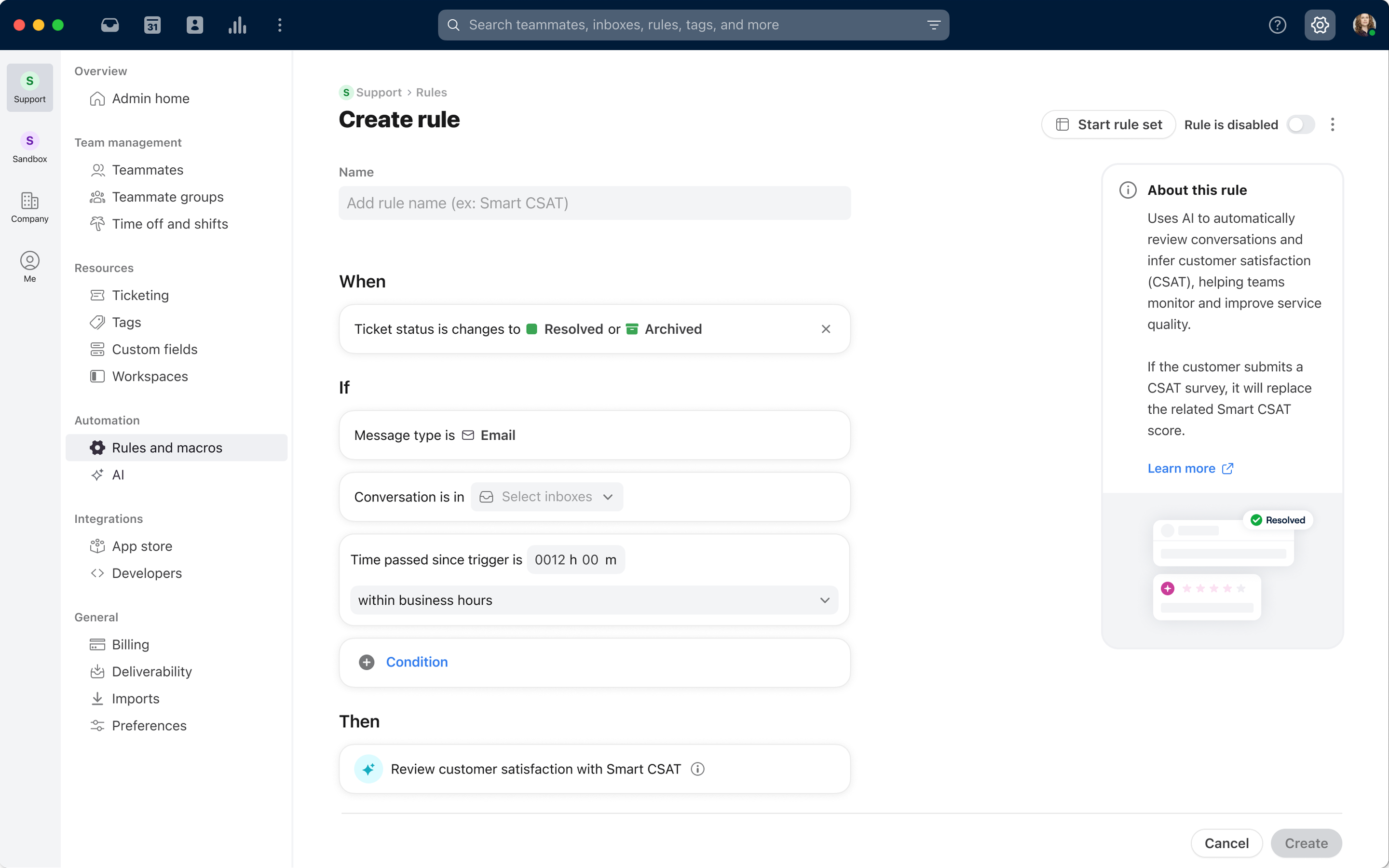
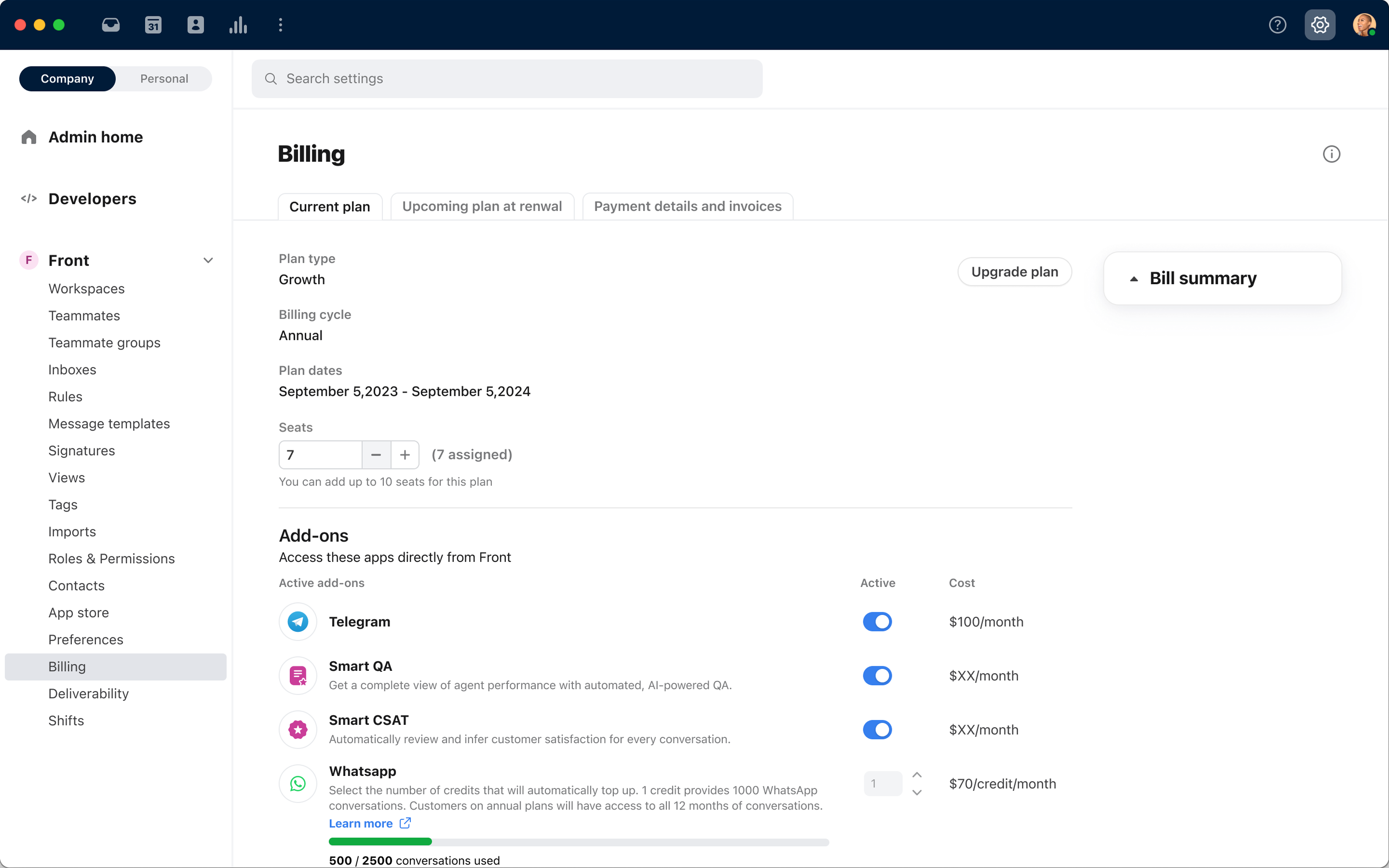
Needed a low-friction way to turn the feature on and pay for it: one rule, one billing flow, no sales call, and a reason to believe the upgrade was worth it before committing.
That last point mattered more than it sounds. Agents and support leaders were the daily users, but admins were the buyers, and their trust in the AI-inferred score had to be earned before they'd pay for broader coverage. Every surface downstream of this had to hold both audiences at once.
Thinking
AI could score every conversation.
That didn't mean it should replace CSAT.
The obvious path was to replace traditional CSAT with AI scoring entirely. We rejected that early.
In user interviews, we repeatedly heard the same concern: people weren't ready to trust an AI-generated score without understanding where it came from. Traditional surveys also captured something the model couldn't replace: direct feedback from the customer.
So instead of choosing one system, we designed them to work together. Customer CSAT represented what customers explicitly told us. Smart CSAT expanded coverage to the conversations where they didn't respond.
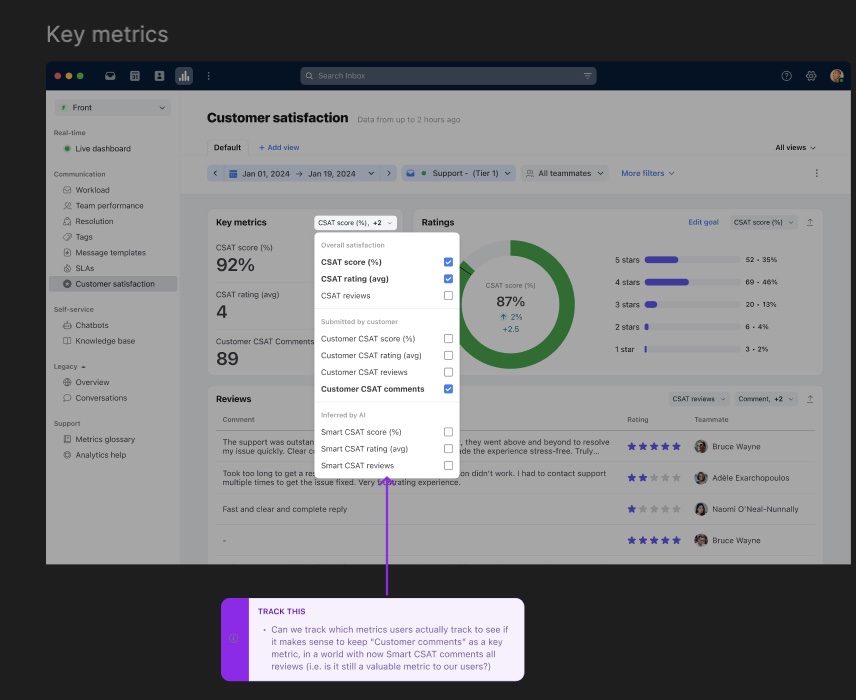
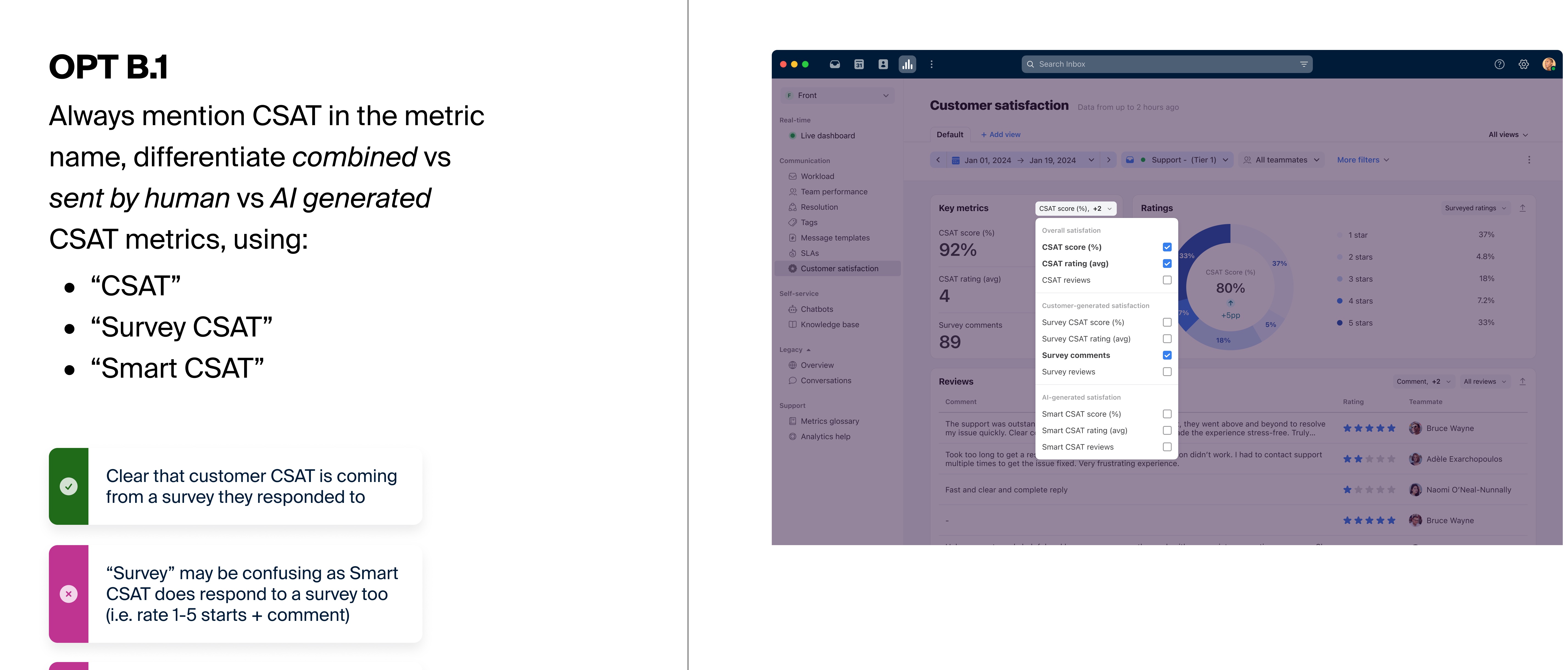
That made trust and clarity central to the experience. We audited how every score was named, explained, and presented across the product. Early options like "Total" were too vague, while "Surveyed CSAT" could still create ambiguity.
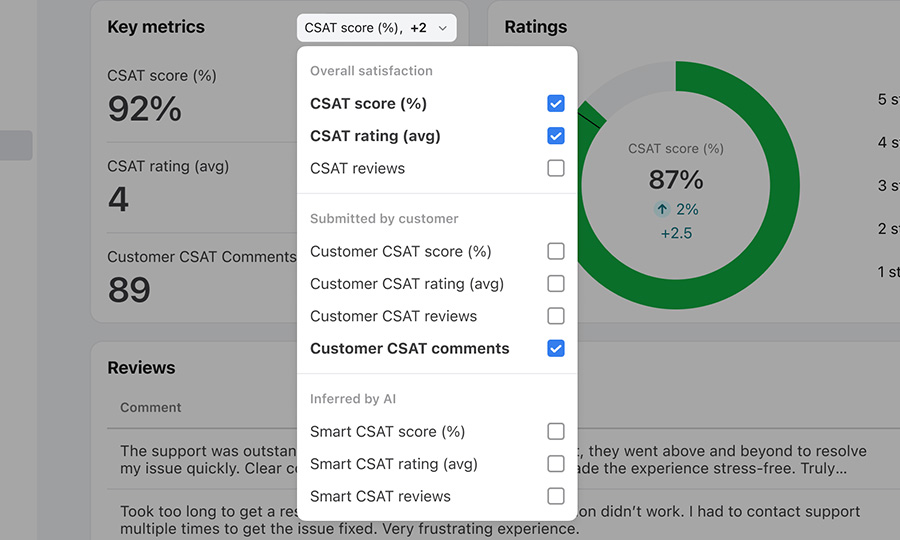
We landed on Customer CSAT and Smart CSAT with a simple test: a support leader looking at a report should immediately understand where each number came from, without needing additional explanation.
The best solution also had to be one we could ship.
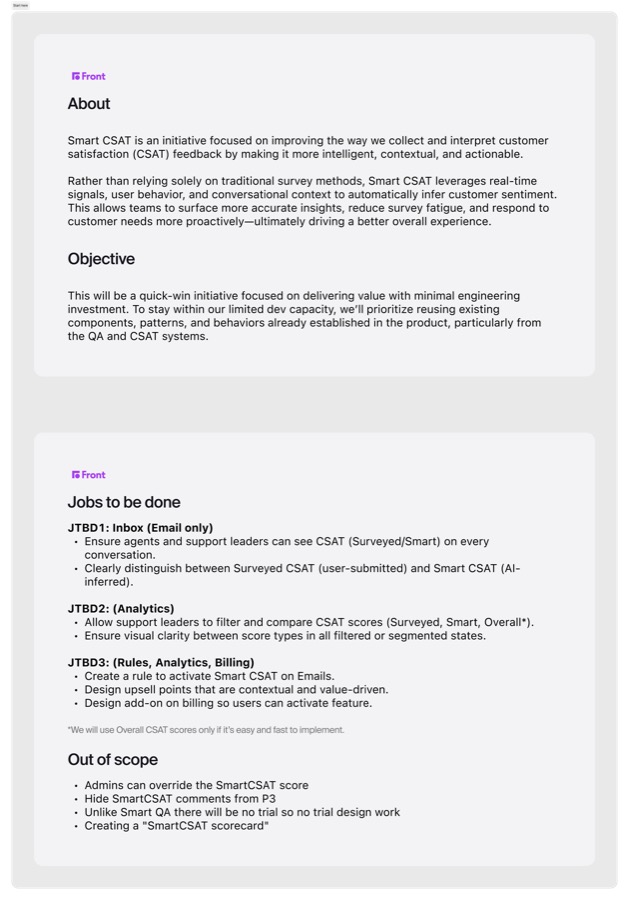
Smart CSAT was part of Front AI, a major cross-company launch with a fixed deadline. It was intentionally scoped as a quick win: deliver meaningful value without building an entirely new system.
That constraint shaped the solution. Instead of reinventing existing workflows, we reused patterns and components from Front's existing QA and CSAT systems and worked across Product, Engineering, Data & Analytics, Billing, and Marketing to fit Smart CSAT into the broader product.
Consistency and speed mattered more than novelty.
The goal wasn't to replace human judgment. It was to give teams enough coverage to act on what they couldn't see before.
Decisions
The choices that shaped the product.
Complement, don't replace traditional CSAT
Replacing survey CSAT was the obvious move, but it was the wrong one. Users weren't ready to trust AI scores without a track record, and survey responses carry emotional signal that AI can't replicate. We designed both systems to coexist, each earning its place: Smart CSAT for coverage, Customer CSAT for the human voice. The AI had to prove calibration before teams would rely on it.
Two score types that never appear as one
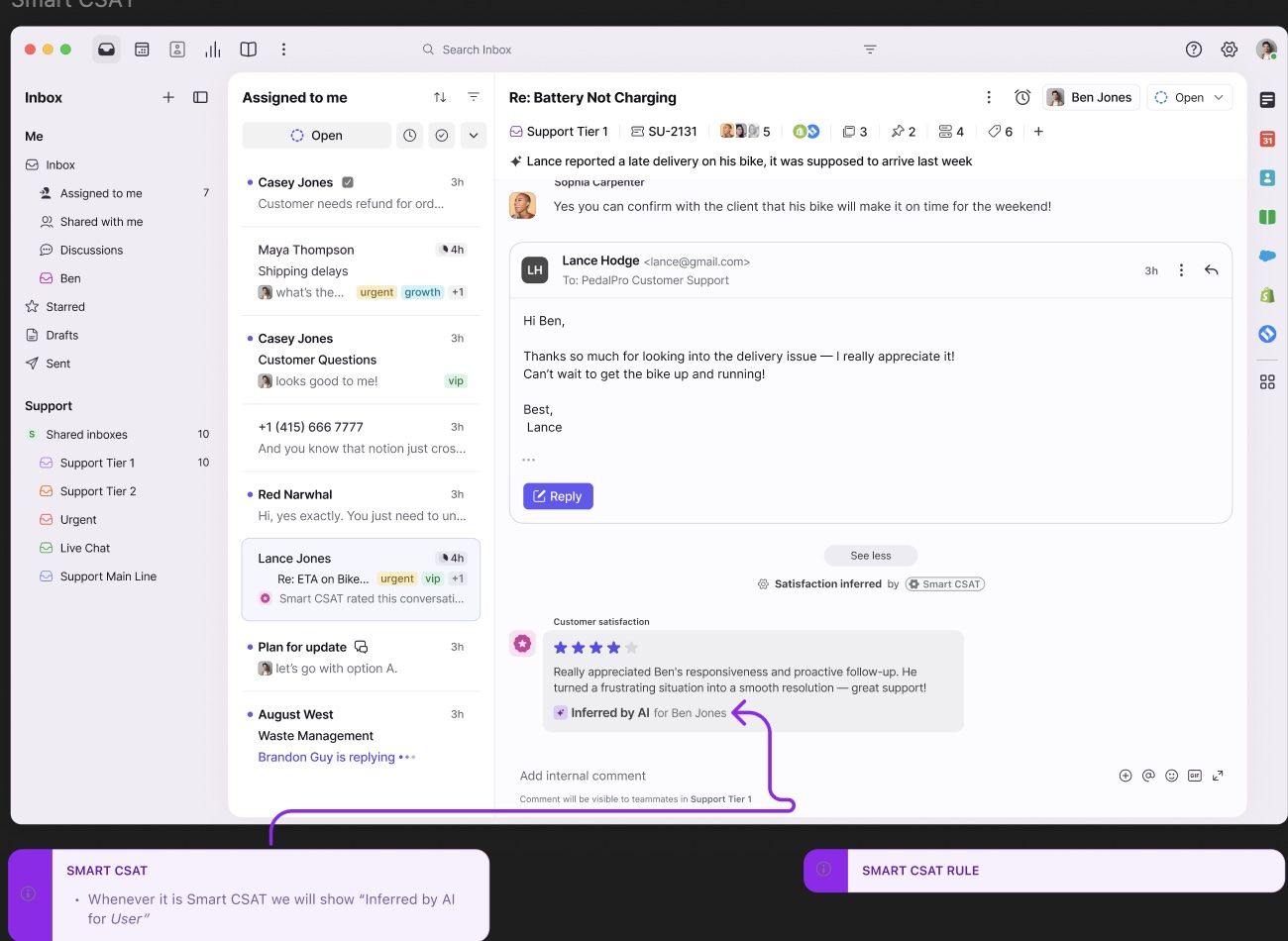
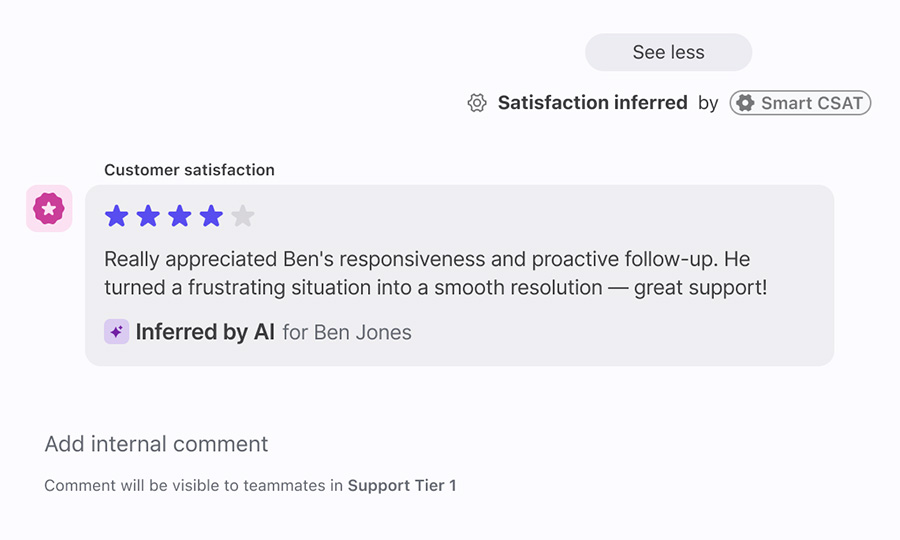
A key constraint: a Smart score and a Customer score could never appear together on the same conversation. Mixing them would corrupt the signal, and users would lose track of what they were actually looking at. So every surface (inbox, analytics, filters, exports) had to make the origin of each score unambiguous. Visual differentiation wasn't polish. It was a trust requirement.
Contextual monetization over interruptive gates
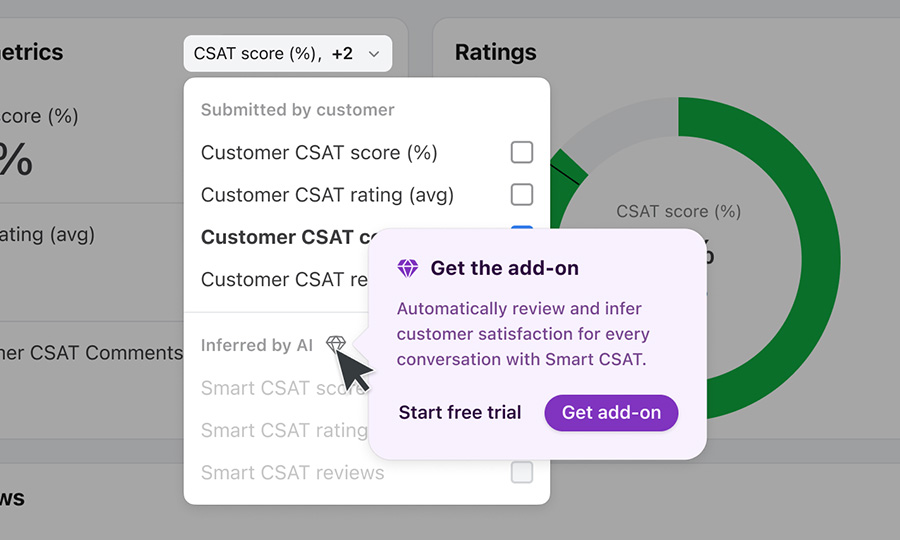
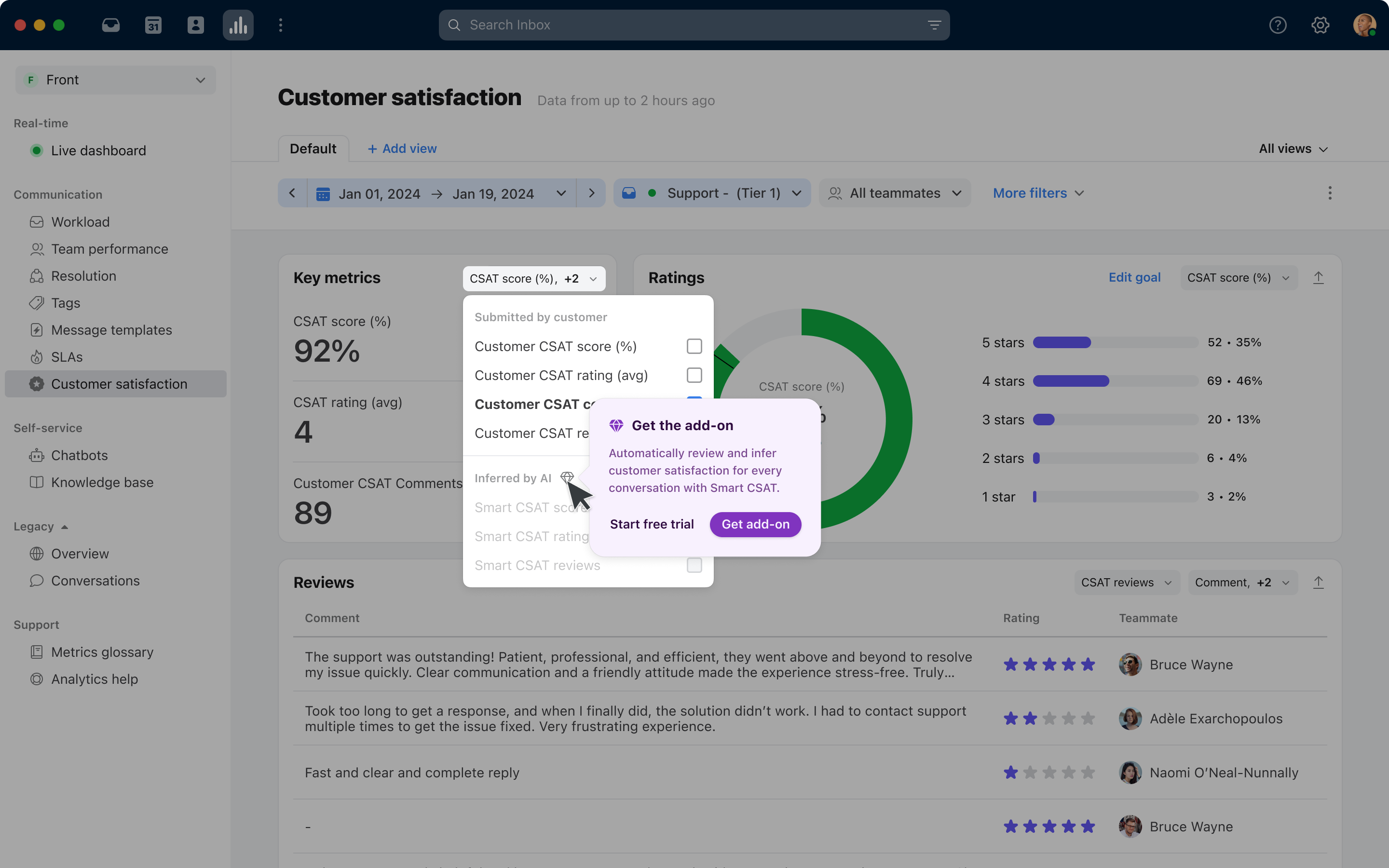
Smart CSAT is a paid add-on. Rather than gating access with a hard paywall, we surfaced the upgrade moment inside the analytics experience, where admins were already looking at incomplete data. The gap in coverage was visible. The value proposition explained itself. Admins could trial the feature free before committing, which meant the decision to buy happened after they'd seen it work.
Adoption through familiarity
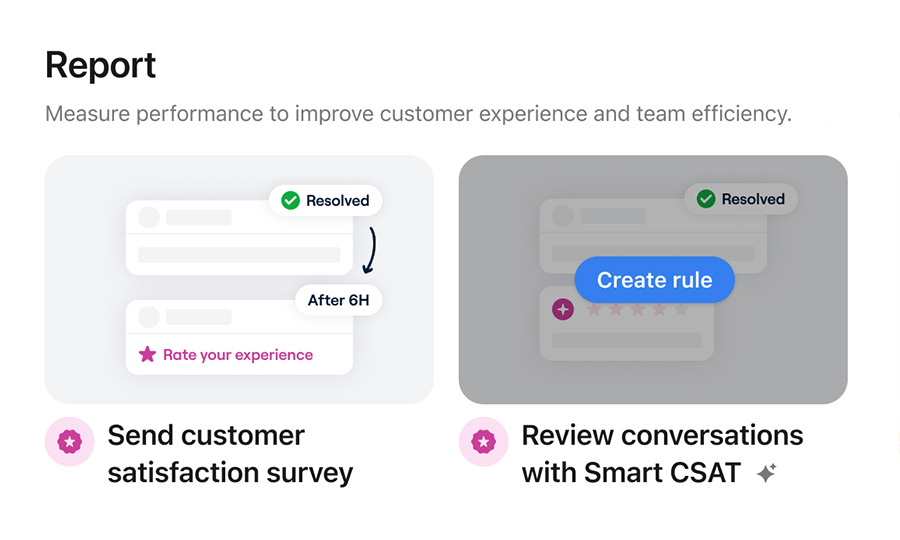
Introducing a new AI capability into a workflow people already trusted meant the rollout couldn't feel disruptive. Activation was embedded into existing patterns, not a separate setup flow. This reduced the perceived risk of trying something new and made the path from trial to adoption as short as possible.
Final Design
The complete experience.
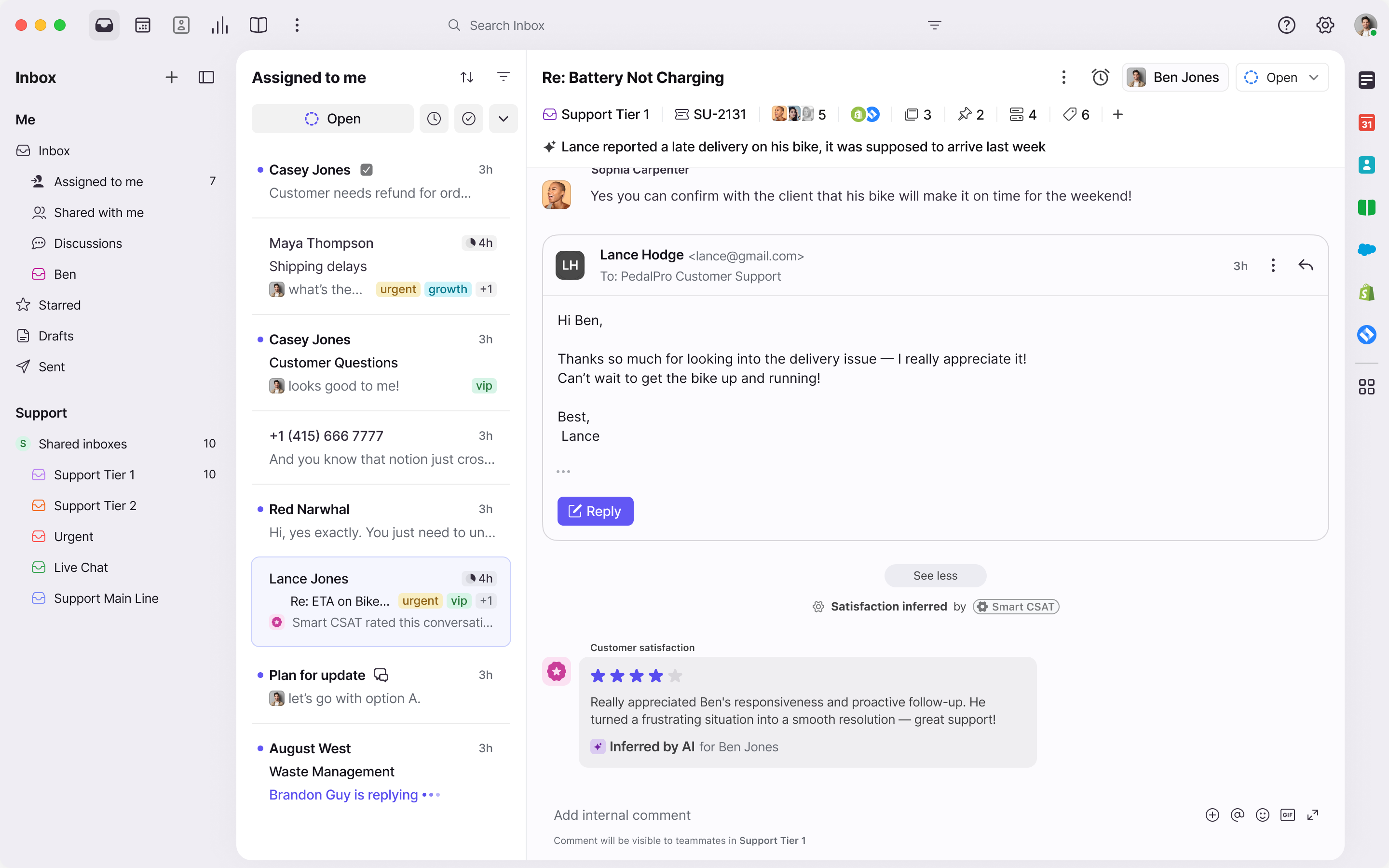
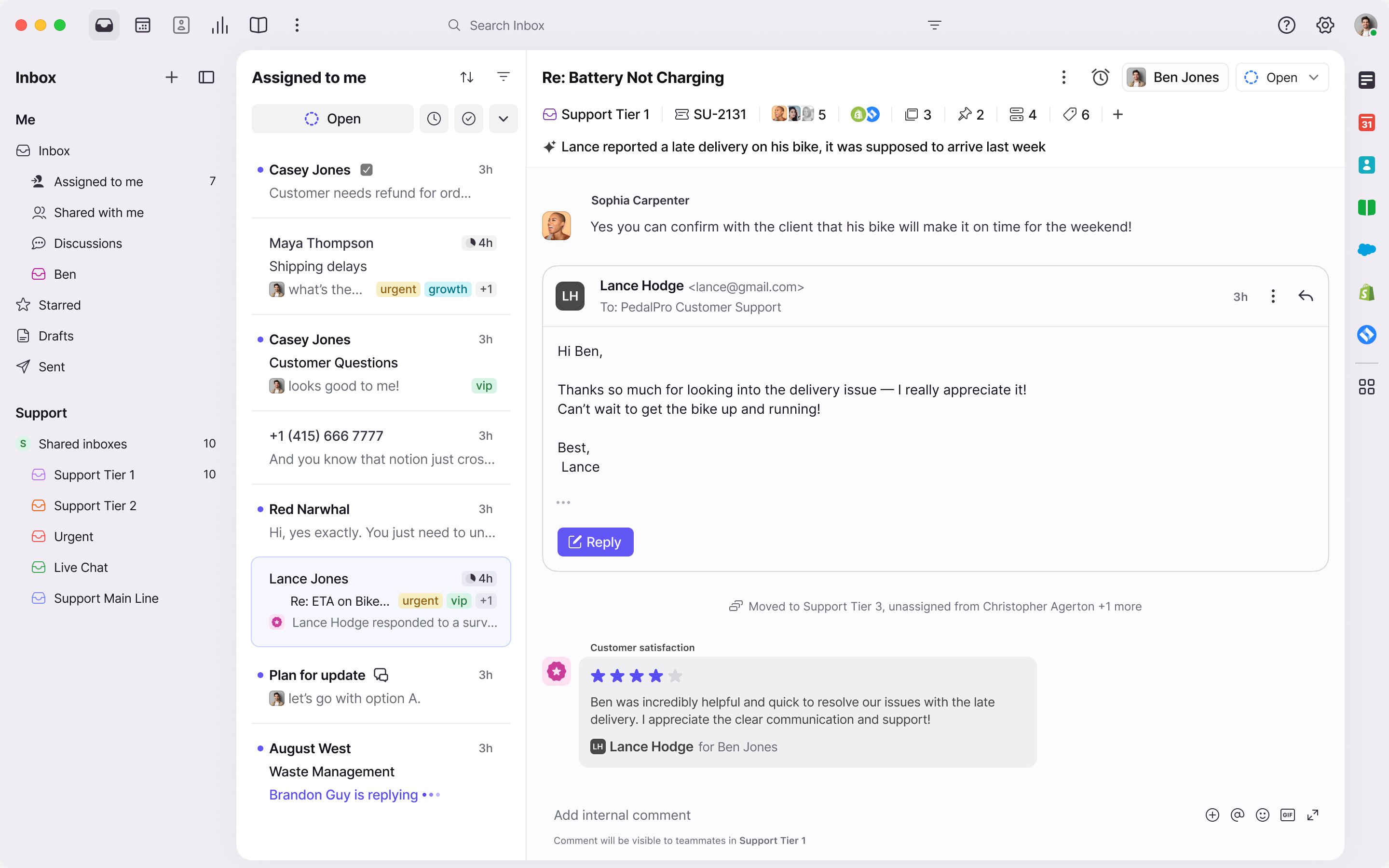
Satisfaction signals in context.
Each conversation shows one score, either customer-submitted or AI-inferred, always clearly labeled so agents and managers always know what they're looking at. The two score types never appear as one. Trust depends on that clarity.
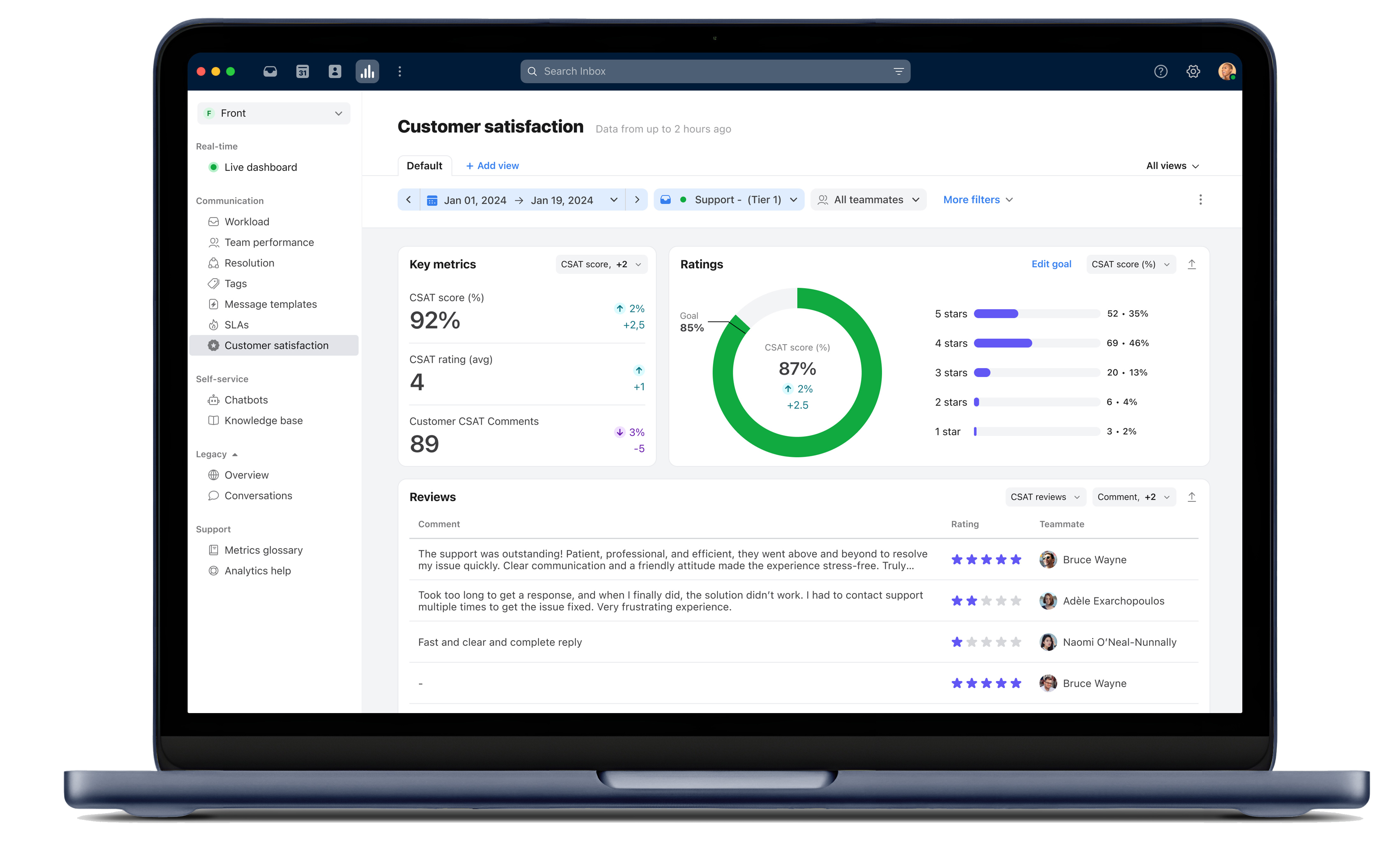
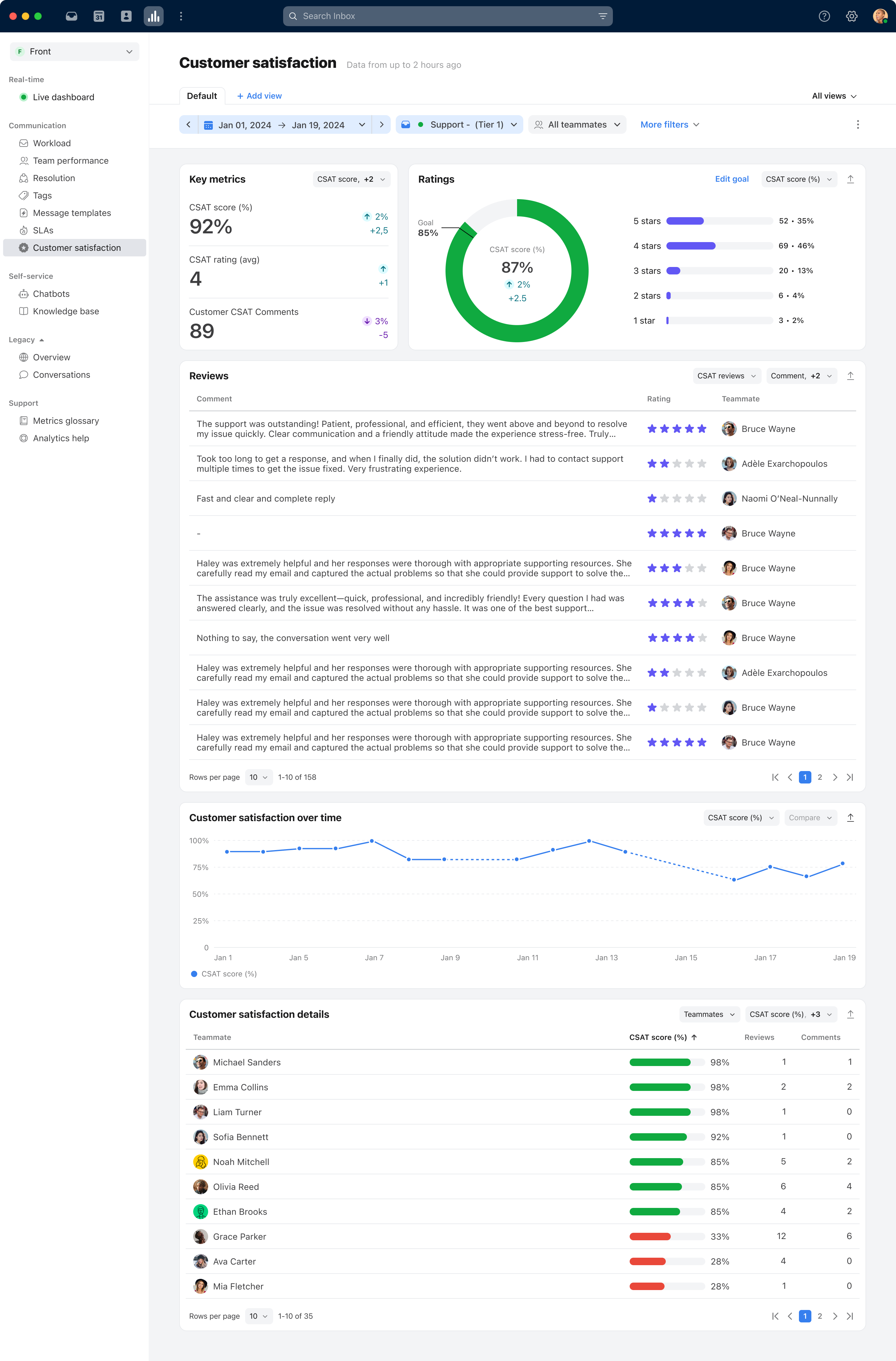
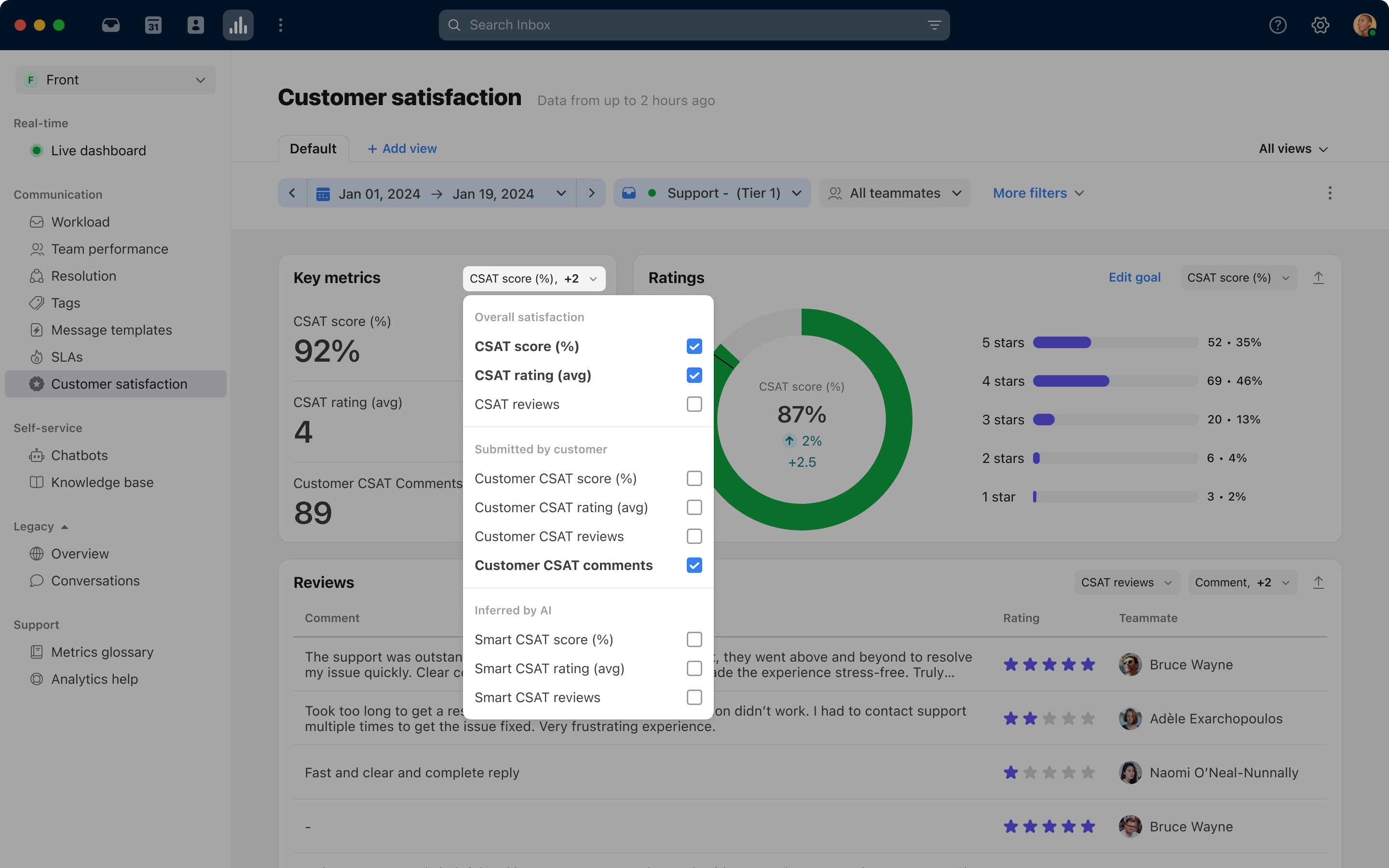
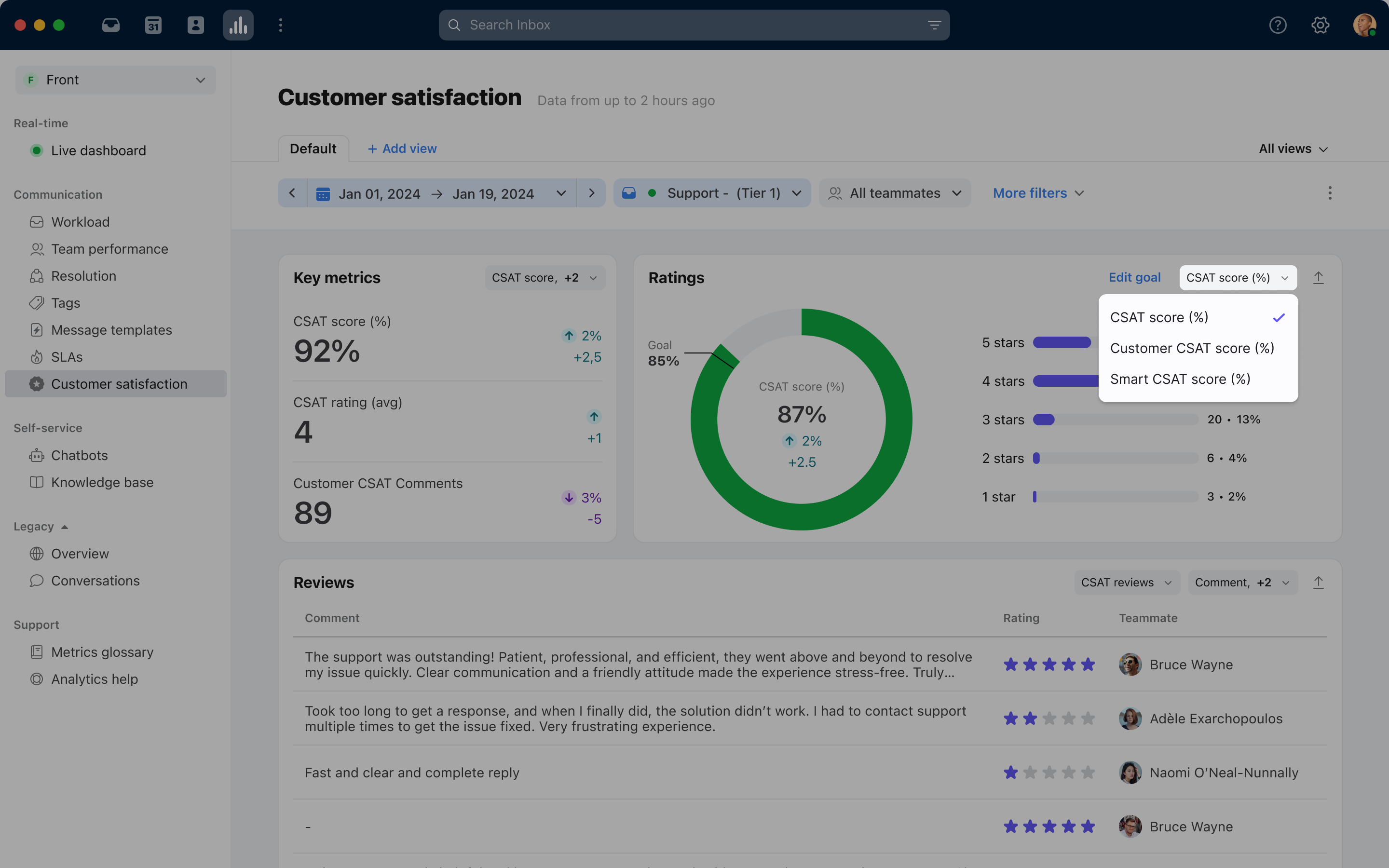
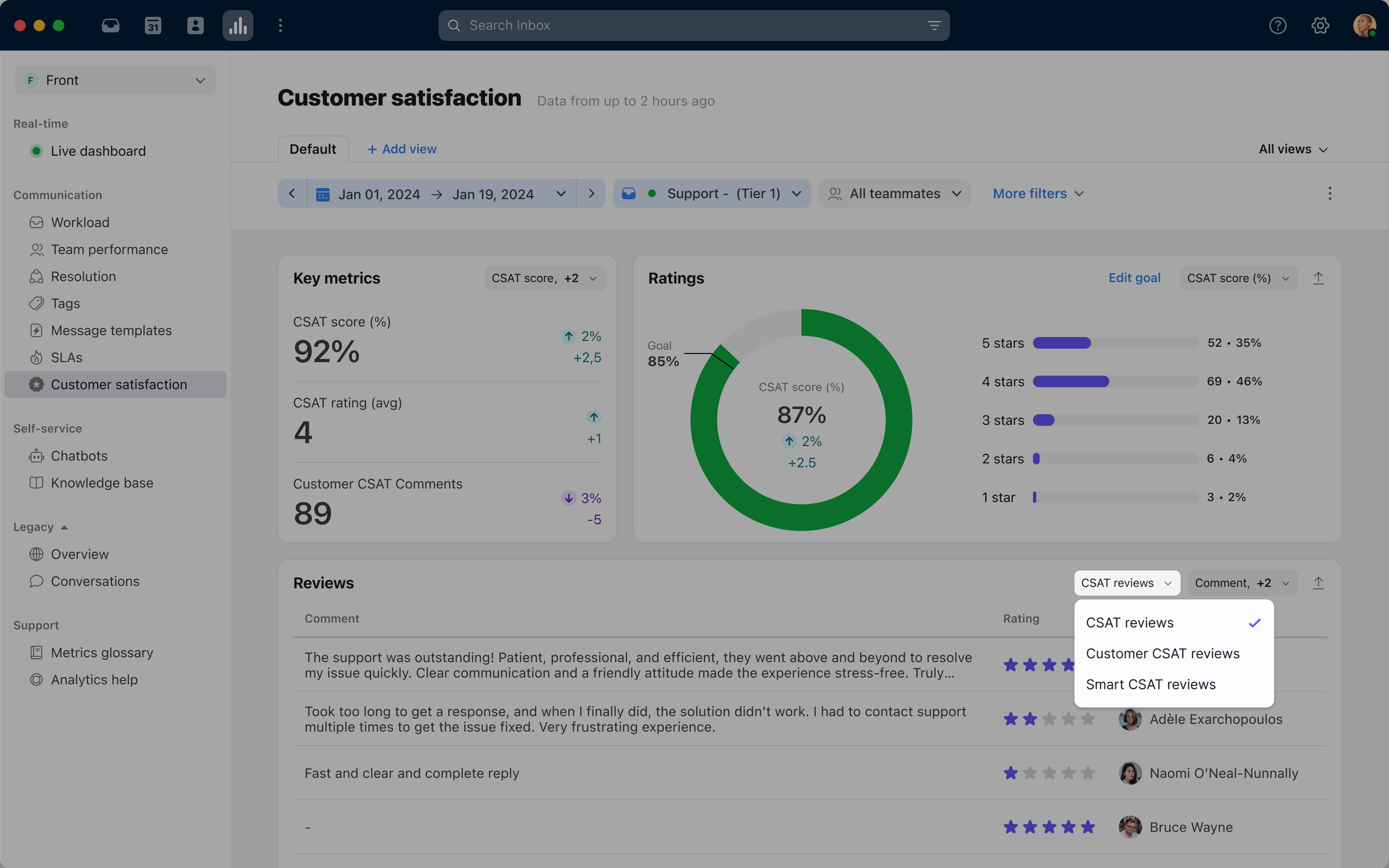
A complete operational view of customer satisfaction.
Support leaders could analyze Customer, Smart, and Overall CSAT side by side across teams, channels, and timeframes. Clear differentiation between score types preserved trust and interpretability at every level of the reporting experience.
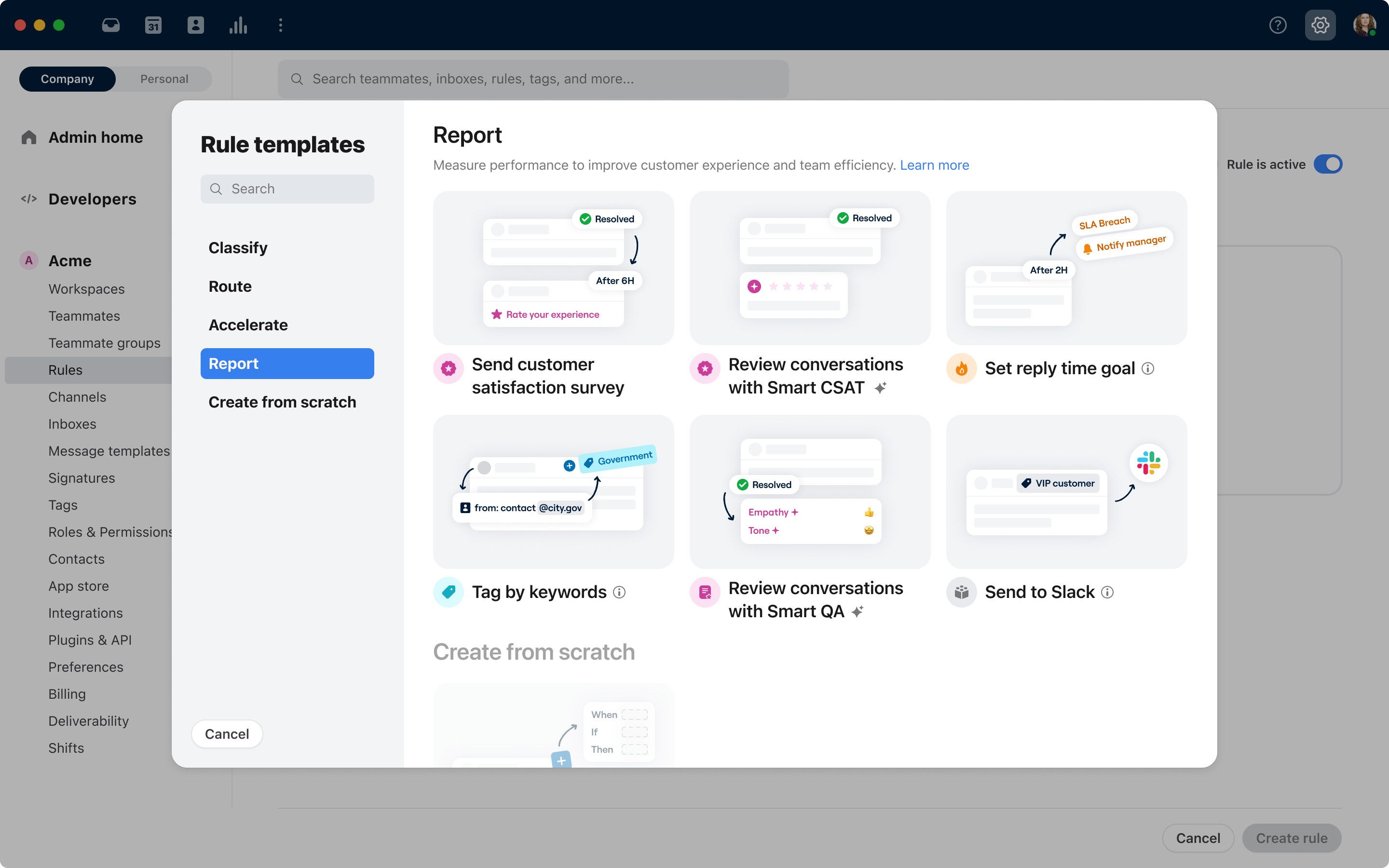
One rule to activate. One flow to pay.
Admins discover Smart CSAT where the gap is already obvious. A single automation rule enables it. A direct billing flow completes the upgrade. No sales handoff, fully self-serve.
Smart CSAT as part of Front AI.
Smart CSAT shipped as part of Front's broader AI launch. This is how it all came together.